Barcelona · hardware since 1976 · plug-ins since 1997

The DUY story, in four acts

We don't record the world. We build it. A soldering iron in 1976, a room on paper in 1994, valves and tape in software in 1997, and whole spaces today: four acts of one method, physical modelling, applied to everything that makes a sound. Every claim below carries a source you can open.

Third partyOurs, archivedOur account

Act one

First, in hardware

Twenty years before the first plug-in, the same work was being done with a soldering iron: sound built out of circuits, one instrument at a time, and credited by name on records you can still buy.

1976

The audiogenerator

The founder of Macromassa described, years later, how the first synth module Duyos built for him reached his hands and what he recorded with it. He is also the man who named these machines audiogenerators, and the name stuck to them for the rest of their working life.

With this sax plugged into a synth module Rafael Duyos had built for me, I recorded Darlia Microtonica, the first Macromassa record

Con este saxo conectado a un módulo sintetizador que me había fabricado Rafael Duyos, grabé Darlia Microtónica, el primer disco de Macromassa
Victor Nubla, in AmazingsRead Nubla on the first Macromassa recordSee who gave the machines their name
Sep 1978

Five DUY machines, on the sleeve of a record

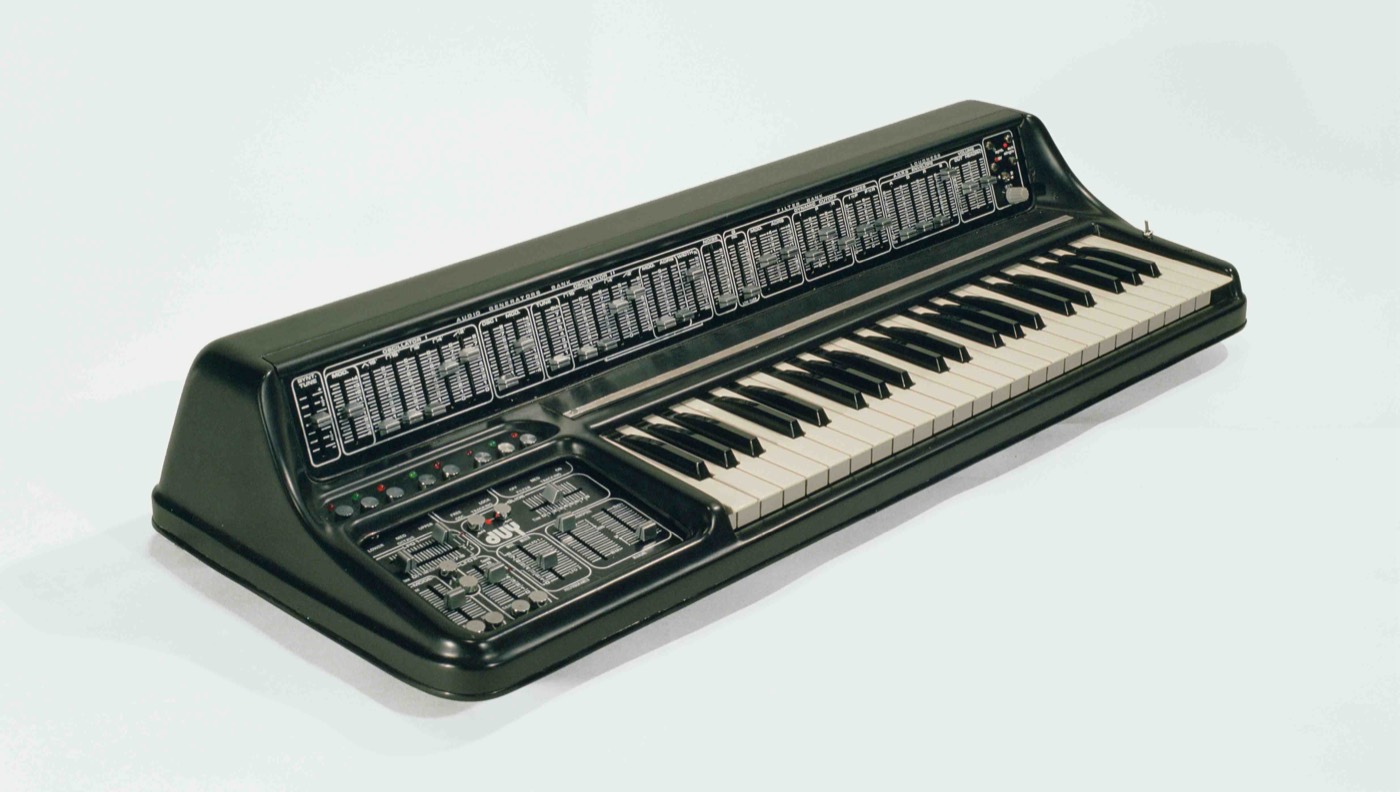
Neuronium recorded Vuelo Quimico at the EMI-Odeon studios in Barcelona. The credits name five DUY-built machines one by one — an audiogenerator, a modular frequency alternator, a multiple sequencer, a Selectron and the Quasar Alpha synthesiser-computer — and Rafael Duyos for general sound and special instruments.

A DUY Alpha 1024 synthesiser built by hand in Barcelona in the late 1970s: two banks of sliders above a keyboard, the panel lettered AUDIO GENERATORS BANK, and the duy logo below it.
Neuronium, Vuelo Quimico (Harvest / EMI-Odeon, 1978)See the record's full credits
1980

Gemini 404

A drum machine built for advertising work and sold in small numbers; Nacho Cano of Mecano bought two. Its maker has claimed it was the world's first digital drum kit, the Simmons that followed being analogue. Two things you can check: Simmons shipped no digital kit until the SDS7 in 1983, and Linn's LM-1 already used digital samples in 1980, the same year, though it was a drum machine, not something you struck.

it was an instrument you could play, it had digital sounds and the full dynamics of a drum kit

era un instrumento que podías tocar, tenía sonidos digitales y toda la dinámica de una batería

Rafael Duyos to Donat Putx, The New Barcelona Post, October 2018Read the 2018 interviewCheck when Simmons went digitalCheck what Linn had in 1980

Act two

Then a room, on paper

The moment the work stops being about instruments and starts being about the space they are heard in.

Jan 1994

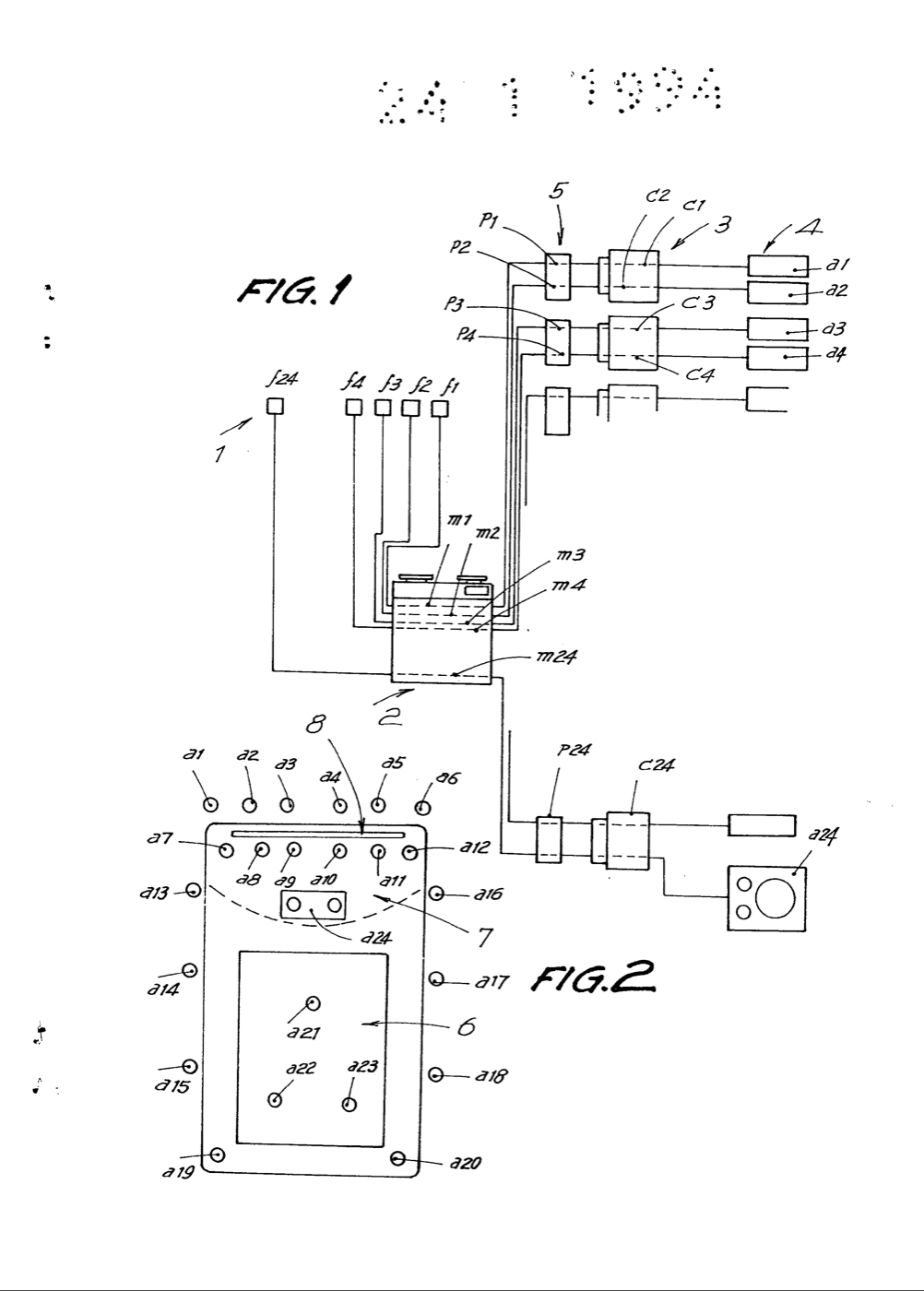
A patent for a room full of loudspeakers

Before the company had sold a single plug-in, its founder registered a method for capturing and reproducing sound in auditoriums and theatres: every source kept on its own track, its own amplifier channel and its own loudspeaker, spread around the audience and never mixed together. Filed in January 1994 and granted in September 1997; the grant was published that November.

Figures 1 and 2 of the 1994 patent: twenty-four sources, each on its own track, its own amplifier and its own loudspeaker, and a plan of the room showing where the twenty-four loudspeakers go.
Spanish Patent and Trademark Office (OEPM) · ES2097078Open the patent, stamped by the OEPM
Jan 1997

A stereo space expander, on the same stand

Among the five plug-ins on the Anaheim stand there was one that was not about warmth at all. Rivers described what it was for in his own words, and the phrase he reached for would not become an industry in Barcelona for another eighteen years.

DUY Wide is a stereo space expander with most likely applications being music for multimedia and virtual reality production

Mike Rivers, Winter NAMM Show Report, January 1997Read what Rivers wrote about Wide
c. 1999-2001†

ReDSPider

Our own product sheet for the DSPider sibling: a library of over two hundred ready-made plug-ins. It is a general-purpose catalogue, but the patch list already included Doppler-Verb and programmable early reflections — rooms, among everything else.

DUY Research product sheetOpen the ReDSPider sheet

Act three

Then the gear that made records sound warm

A decade modelling valves and tape for the people mixing hit records, and the word they used for it.

Jan 1997

Anaheim, January 1997

A trade report written on the show floor puts DUY at Winter NAMM with five plug-ins on the stand: DaD Valve, Declicker, DUY Wide, Max DUY and DUY Shape.

a new plug-in developer from Spain, here at the show for the first time

Mike Rivers, Winter NAMM Show ReportRead the NAMM show report
Jan 1998

Paul White goes through the range

Paul White went through the range in Sound on Sound: European plug-ins with stylish interfaces and unusual features, from a company he described as new to the field.

Paul White, Sound on Sound, January 1998Read Paul White's review
Nov 1998

DSPider

Sound on Sound reported the launch at the San Francisco AES convention: forty combinable modules, over 170 factory patches, and plug-ins you assembled yourself by dragging and dropping.

the first ever plug-in creation tool

Sound on Sound, November 1998, p.12Read the DSPider launch report
2002

They all used the same word

Between 2002 and 2003 four professionals reached for it without being asked. Andy Gray: warm and original. Paul Carrack: warmth and colour, and his engineer Nigel Bates: the warmth and depth. Chris Porter: the warmth and roundness of glowing tubes. The word for that decade is theirs, not ours.

DUY is warm and original.

Andy Gray, on his own page at duystore.comOpen Andy Gray's pageSee all four, and the rest
Apr 2002

In Digidesign's own magazine

Charles Dye laid out the chain he used to emulate an analogue session. DaD Valve is his tube mic pre and DaD Tape his tape stage, listed beside Waves and McDSP as though it were obvious. Not a review and not an advert: an engineer explaining his method in the house magazine of the people who made Pro Tools.

Tube Mic Pre: DUY DaD Valve

Charles Dye, Digidesign DigiZine, April 2002Read the DigiZine column

Act four

And then space itself

The same technique, applied to the whole room instead of one box in it.

Sep 2015

Sony Pictures Studios, Culver City

Mix Sound for Film, run with the Cinema Audio Society and the Motion Picture Sound Editors. Two Master Classes in the William Holden Theatre, in a series otherwise made up of Dolby, DTS, Auro and AID. The keynote that morning was given by Mark Mangini.

Spanish company DSpatial will be showcasing their new immersive physical modeling mixer

Mix Sound for Film & Television, event programmeSee how Mix introduced DSpatialSee the schedule for the day
2017

Blade Runner 2049

Ron Bartlett, talking to postPerspective about the mix, described the reverb he had been working with and where it came from. A decorrelated reverb, he explained: add as many channels as you like and pan them into every speaker in the room.

Mark Mangini and I helped to develop DSpatial. It's a very unique reverb

Ron Bartlett, postPerspectiveRead Bartlett's interview
Oct 2017

AES New York

The Audio Engineering Society put Rafael Duyos on its Audio for Cinema panel at the 143rd convention, alongside Avid, Sound Particles and Flux: four different approaches to the newest immersive cinema formats.

audioXpress, October 2017Read the AES convention preview
Jun 2019

Avid Space Tokyo

Avid and DSpatial ran a joint immersive audio seminar in Akasaka. The Japanese trade press covered it and introduced the second session by its speaker: the Barcelona company's founder, who had filed a 3D audio patent back in the nineties.

Sep 2020

Reality 2.0

Four versions, and Sound & Recording in Tokyo covered the launch with a price in yen for each one. That is how you can tell a product is genuinely being sold somewhere rather than merely announced.

Sound & Recording Magazine (サンレコ), September 2020Read the Sound & Recording piece
2022

Last Whispers

We built a dedicated version of Reality Builder for Mark Mangini and mapped the 54.1 loudspeakers of the AlloSphere at UC Santa Barbara for Lena Herzog's oratorio for the world's vanishing languages, shown in Venice in 2022. The work's public credits name the AlloSphere and Unreal Engine, not us, so this one is our own account.

Today

Who we work for

Our tools have gone into work for Apple, Microsoft, NHK, Skywalker Sound, Sony, Disney, Warner Bros, Electronic Arts and Technicolor.

Keep pulling the thread

The rest of the evidence

  • Press coverageMix, EQ, Sound on Sound and Digidesign's own magazine, from 1997.
  • The expertsThe engineers who chose DUY, in their own words.
  • Press archiveWhat we announced at the time.

The same company builds immersive audio today under another name. Dspatial, The Immersive Company